Burst Pipe Cleanup: What to Do in the First 24 Hours
At Incredible Restorations, LLC, burst pipes are the call our phones light up with every Connecticut winter. We are a family-owned, IICRC-certified restoration company based in Newington, and we have been handling water damage across Central Connecticut since 2017. That work covers drying out the house and rebuilding it afterward. This guide walks through what we do, and what you should do, from the moment the water stops to the end of day one.
Quick Answer: Once the water is shut off, the first 24 hours of burst pipe cleanup come down to five jobs. You find every place the water reached and get the pipe repaired. Then the water comes out, the materials that cannot be saved come out, and drying equipment goes in with daily moisture readings. Speed matters most in the first 8 to 12 hours, because that is when wet drywall, carpet pad, and cabinet bases are still salvageable.
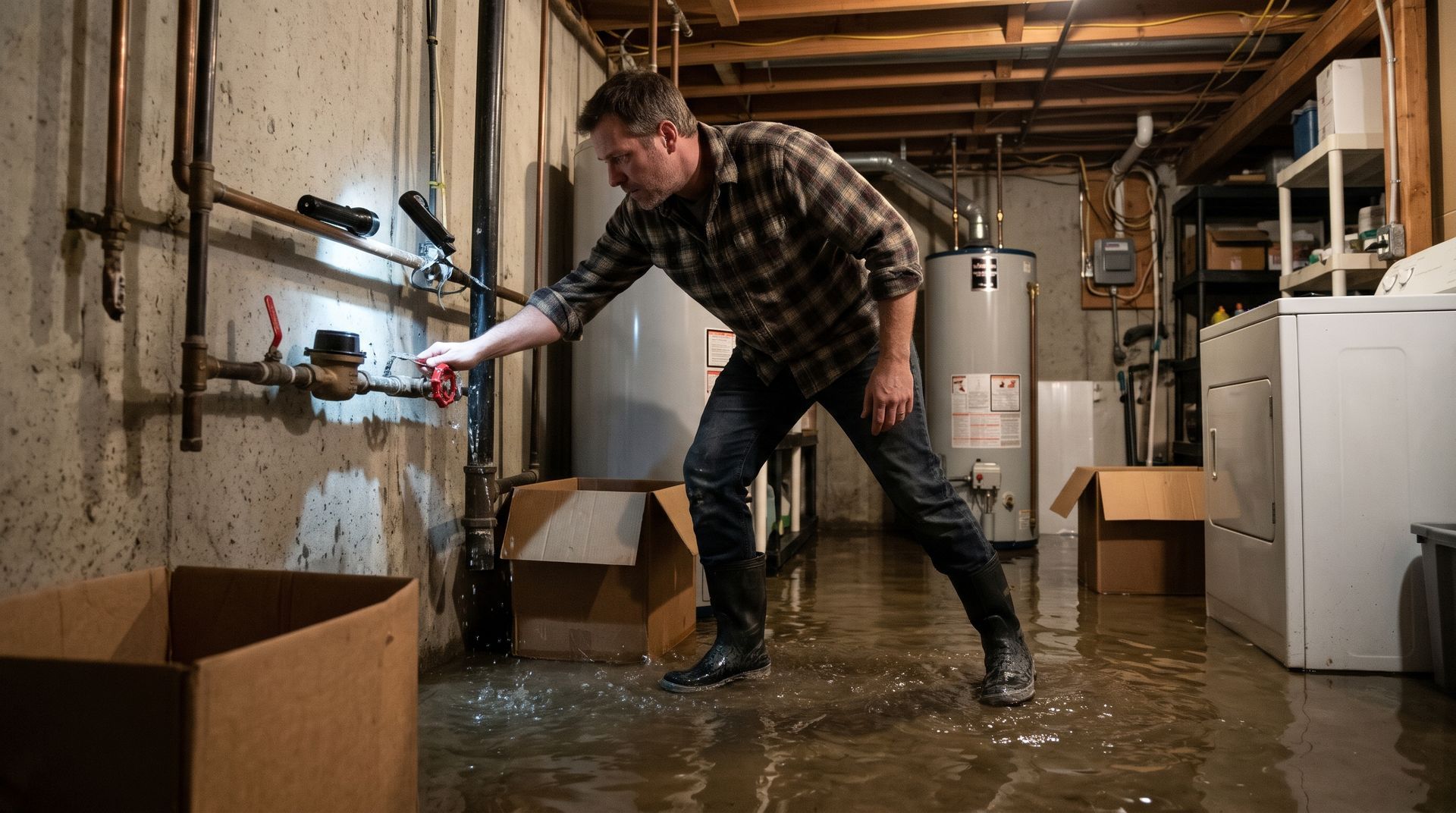
If water is still running right now, stop here and follow our guide to
the first 60 minutes after a pipe bursts. It covers the shutoff valve, electrical safety, and your first photos. This article picks up after that.
In This Guide
- The First 24 Hours at a Glance: Hour-by-hour overview.
- Map Where the Water Went: Finding the hidden spread.
- Get the Pipe Repaired: Plumber timing and water service.
- Extraction Comes First: Why removal beats evaporation.
- What Comes Out on Day One: Save or remove decisions.
- Setting Up Drying: Equipment and readings.
- Protecting Your Belongings: Furniture, rugs, and papers.
- Mistakes That Make Cleanup Harder: What we see go wrong.
- Get Help With Burst Pipe Cleanup: 24/7 response.
- Frequently Asked Questions: Quick answers.
The First 24 Hours at a Glance
Every burst pipe is different, but the order of work is almost always the same. Here is how a well-run first day usually unfolds.
| Time Window | What Should Happen | Why It Matters |
|---|---|---|
| Hour 0 to 1 | Water shut off, power checked, first photos taken | Stops new water and protects your claim |
| Hours 1 to 3 | Every wet area located, including ceilings and cavities below | Missed areas are where mold starts later |
| Hours 2 to 6 | Pipe repaired or isolated so water can return to the rest of the house | You need running water to live in the home |
| Hours 3 to 8 | Standing and absorbed water extracted from floors and carpet | Extraction removes far more water than fans ever will |
| Hours 6 to 12 | Unsalvageable materials removed, cabinets and baseboards opened | Opens wall and floor cavities so they can dry |
| Hours 8 to 24 | Air movers and dehumidifiers running, first moisture readings logged | Sets the baseline for drying the home to standard |
The windows overlap on purpose. On a good response, extraction is starting in one room while we are still mapping moisture in another.
Hours 1 to 3: Map Where the Water Actually Went
The puddle you can see is rarely the whole story. Water from a pressurized supply line sprays, then runs. It follows framing, flows under walls, and soaks into anything absorbent on the way down.
Water Travels Farther Than You Think
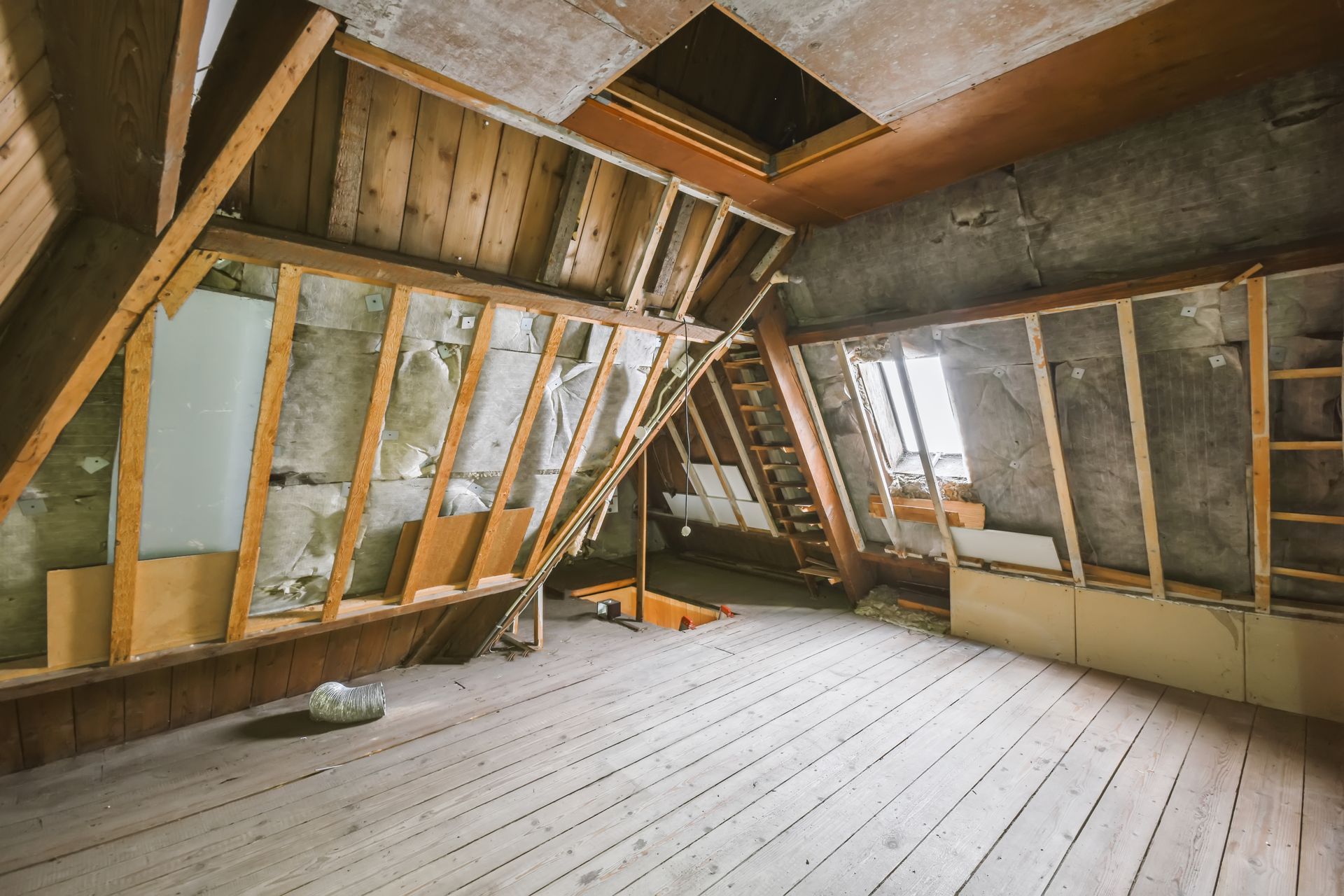
A second-floor bathroom supply line that splits behind the vanity often shows up first as a drip from a kitchen light fixture below. By then, it has already soaked the subfloor, the ceiling insulation, and the top of the kitchen wall cavity. In older Central Connecticut homes, especially pre-1940 colonials in towns like Hartford, West Hartford, and New Britain, open wall cavities can carry water down two full floors before anyone sees a stain.
Check the Ceiling Below
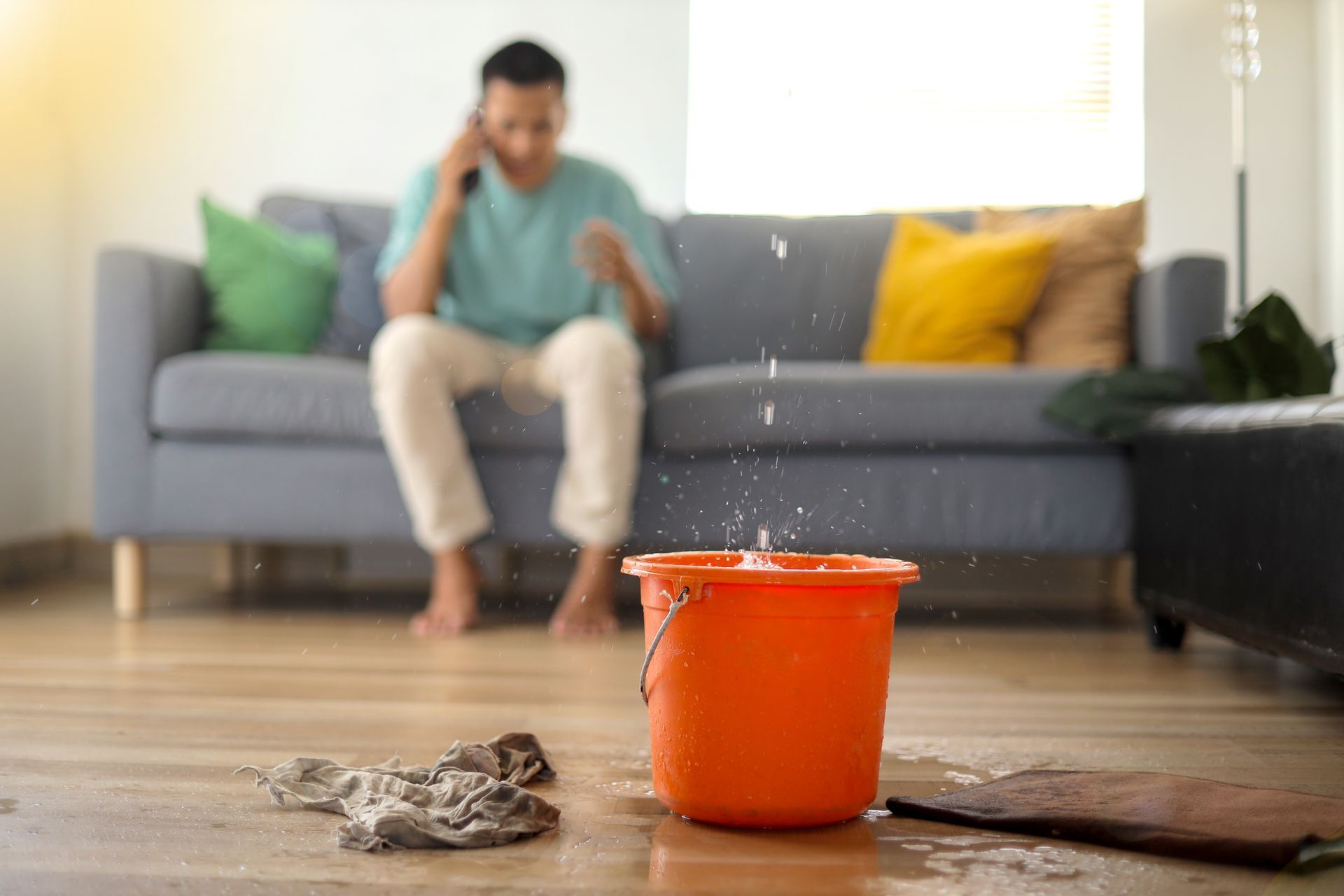
If a ceiling is sagging or bubbled, stay out from under it. A drywall ceiling holding water can come down without warning. With the power to that area off, a restoration technician will often relieve the pressure with a small controlled hole and a bucket underneath. That gets the water out where it can be managed instead of letting the panel fail.
Places to Check Before You Call It Contained
- The ceiling and walls directly below the burst, including light fixtures and recessed cans.
- The base of every wall in the wet room, where drywall wicks water upward.
- Under and behind cabinets, since the toe kick hides a cavity that holds water for days.
- Adjacent rooms, because water moves under interior walls along the subfloor.
- The basement ceiling and joists under any first-floor burst.
- Closets and storage areas where boxes on the floor absorb water quietly.
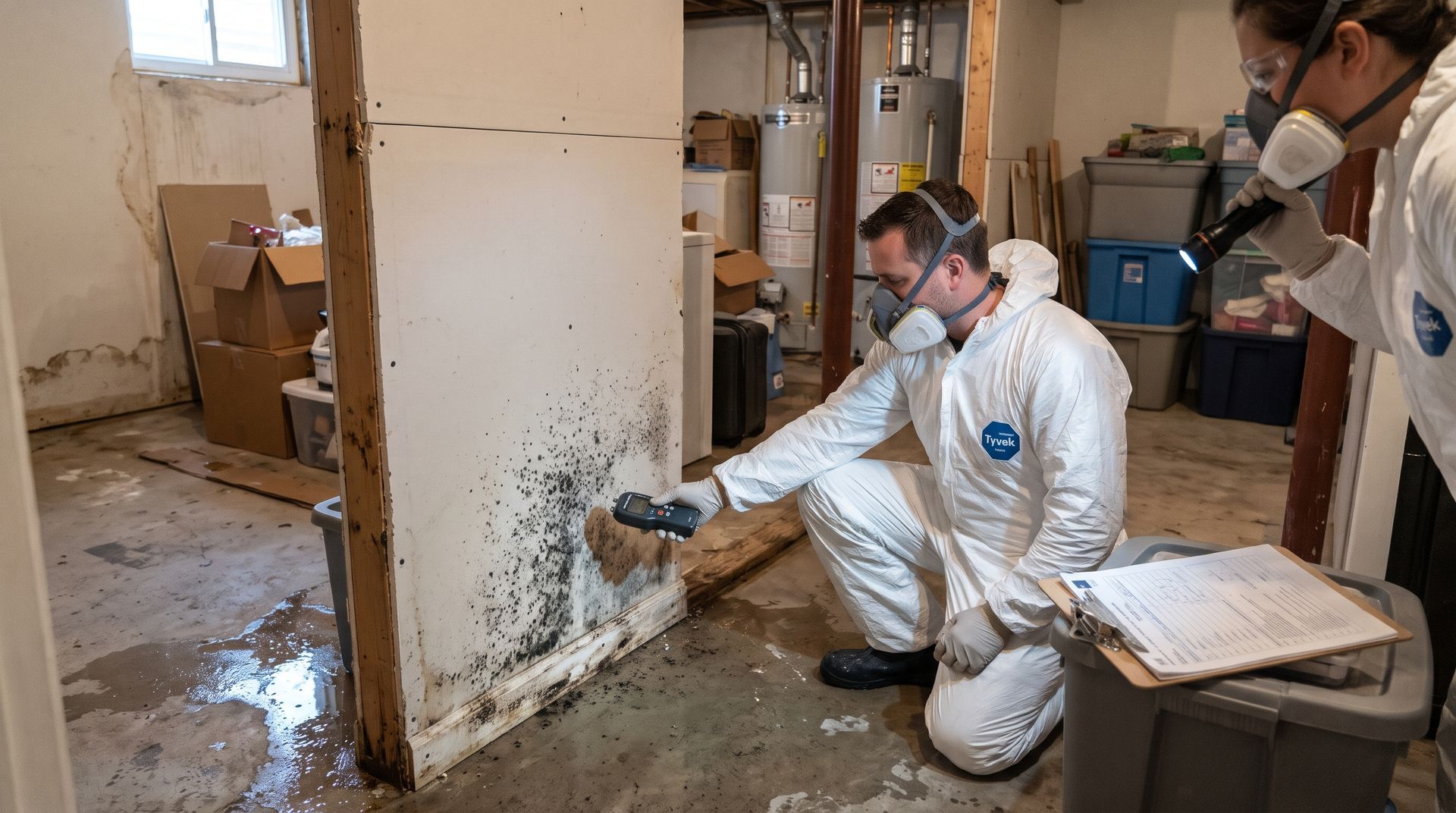
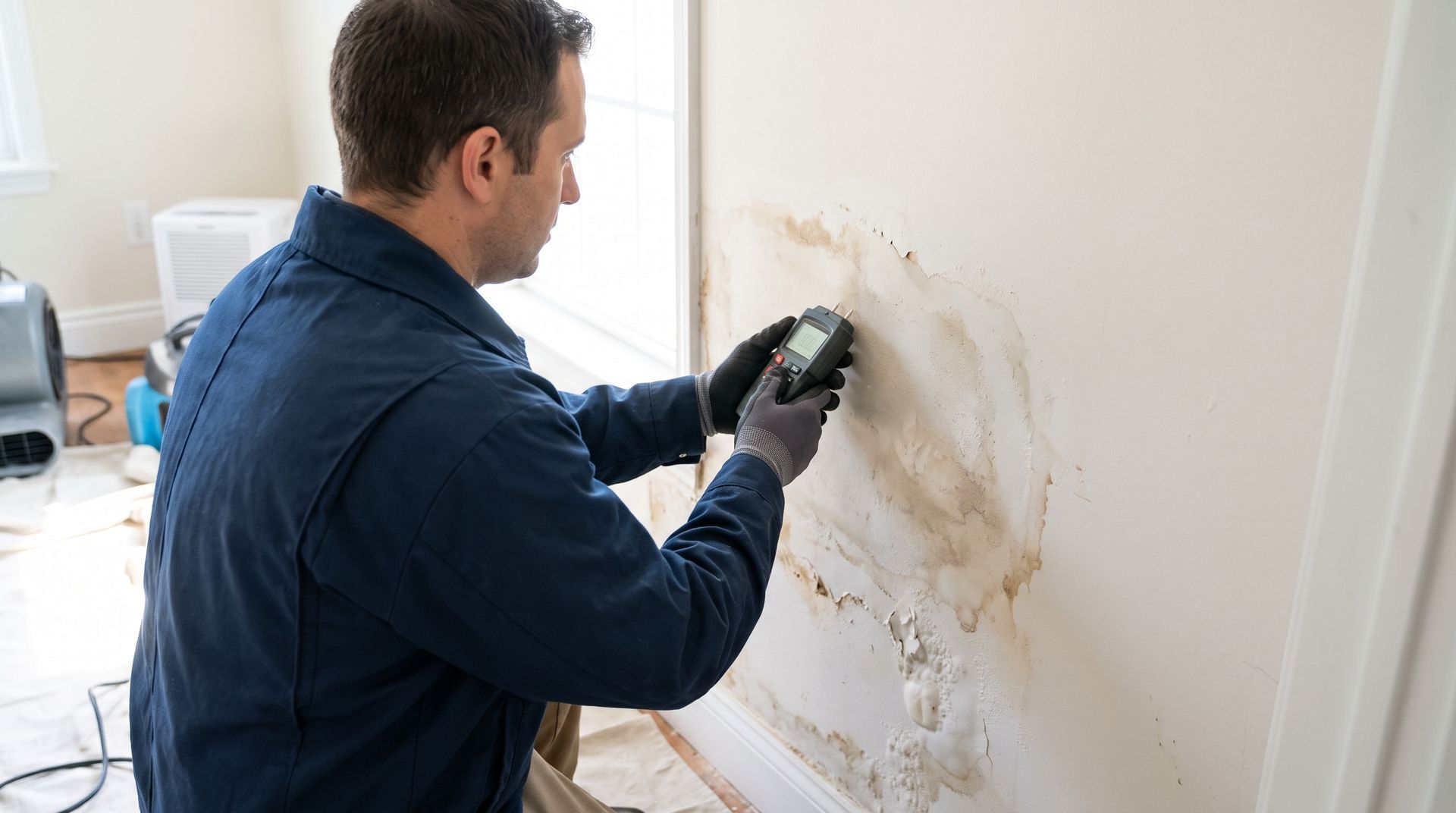
We use moisture meters and thermal imaging to trace the edges of the wet area. The point is to find water in places that still look and feel dry, which is exactly what you cannot do by touch.
Hours 2 to 6: Get the Pipe Repaired Before Water Goes Back On
A plumber fixes the pipe. A restoration company deals with what the water did to the house. Those are different jobs, and on a burst pipe you usually need both on the first day.
Getting Water Back to the Rest of the House
If the break is on a branch line, a plumber can often cap or isolate that line so the kitchen, bathrooms, and laundry work again within hours. That matters more than people expect. A family can live through drying equipment, but not without water. Ask the plumber to test the repair under pressure before the wall or ceiling around it is closed back up.
Keep the Failed Part
If the break came from a fitting, a supply hose, or a valve, ask the plumber to bag and keep the failed piece. When a defective part causes the loss, an insurance company may want to inspect it. Once it goes in the plumber's scrap bin, that option is gone.
If the Pipe Froze
A frozen pipe rarely freezes alone. Other lines in the same exterior wall, garage ceiling, or crawl space may still be frozen and could split as they thaw. Keep the heat on throughout the house, open cabinet doors on exterior walls, and never thaw a pipe with an open flame. Our article on
frozen pipe cleanup in CT covers safe thawing and winter prevention in more detail.
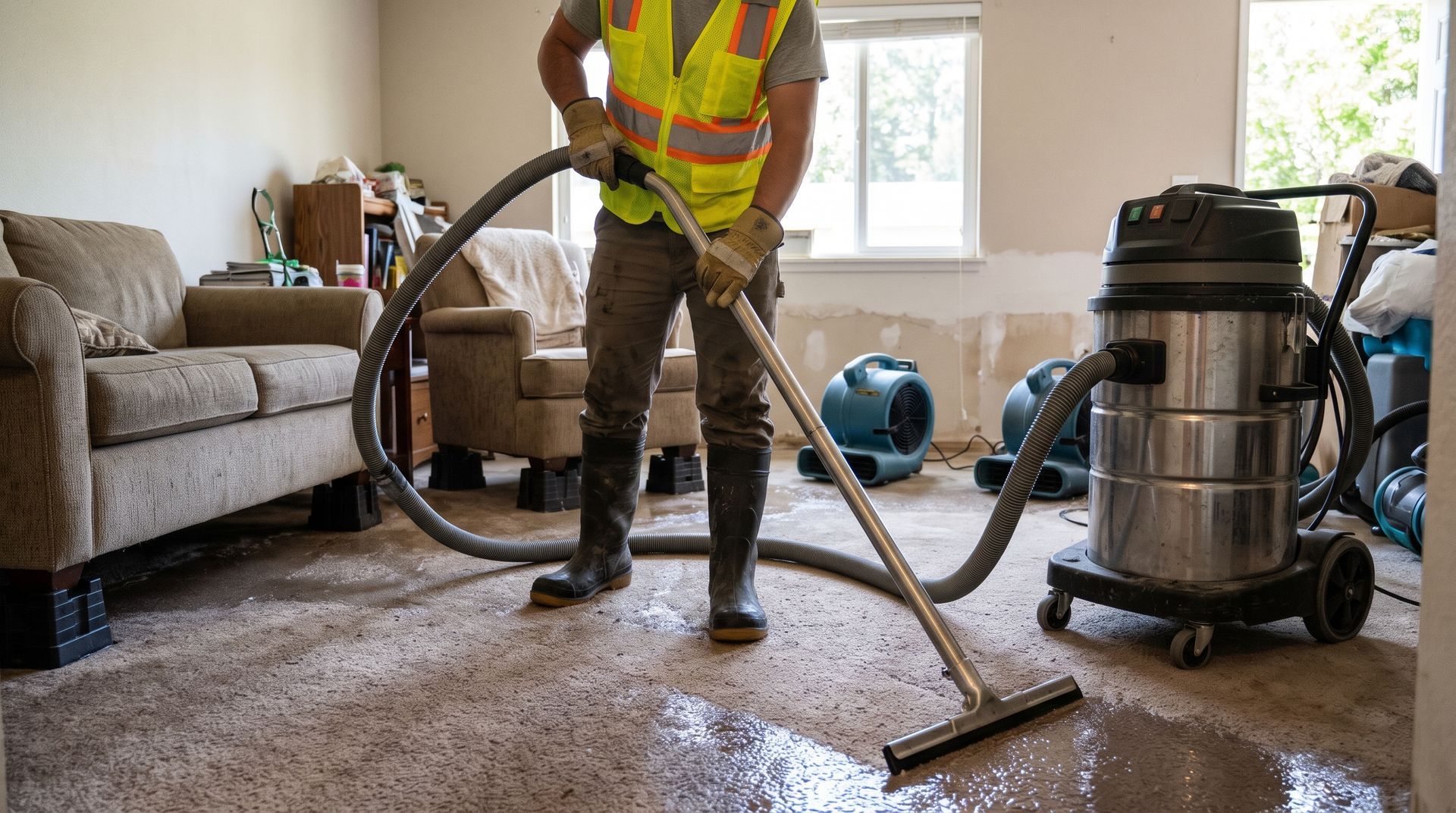
Hours 3 to 8: Extraction Is the Step That Saves Materials
Fans and dehumidifiers dry what is damp. They are slow and expensive at removing water that is still sitting in carpet, pad, and flooring. Extraction removes it physically, and the more water that comes out early, the shorter the whole drying job.
Why Towels and Shop Vacs Fall Short
A shop vac pulls water off the surface of a carpet but leaves the pad underneath soaked. Professional extraction uses high-powered units and weighted tools that press water out of the pad and back up through the carpet. On hard floors, water that has slipped under laminate or into the seams of hardwood also needs to be pulled out, not just mopped off the top.
Clean Water Does Not Stay Clean
A burst supply line starts as clean water, which the restoration industry calls Category 1. It changes quickly. Water that runs through ceiling insulation, across dirty subfloors, and sits for a day picks up contaminants and can be treated as Category 2. If the break involved a drain line or a toilet supply that flooded the bowl, it may never have been clean at all. The category decides what can be dried and what has to be removed, so it gets assessed on day one.
Our article on
what water mitigation is explains how this emergency phase differs from the repairs that follow.
Hours 6 to 12: Decide What Comes Out Today
This is the part homeowners find hardest to watch. Removing some materials on day one is what keeps the rest of the house from rotting or growing mold. Trying to save everything usually means losing more.
Usually Removed on the First Day
- Carpet pad, which is cheap to replace and very hard to dry in place.
- Sagging or soaked ceiling drywall, which can fail and hides wet insulation above it.
- Wet insulation, especially cellulose, which EPA cleanup guidance says to discard after water damage.
- Laminate flooring with swollen edges, since its fiberboard core does not recover.
- Particleboard cabinet bases and vanity floors that have started to swell.
- The bottom strip of drywall on walls that wicked water up, often cut 2 feet off the floor.
Usually Dried in Place
Solid wood framing, plaster walls on lath, ceramic tile, and many hardwood floors can often be dried without removal if extraction starts early. Hardwood needs specialized drying mats and patience. Solid wood cabinets can usually stay if we remove the toe kick and push dry air into the cavity behind it.
Test Before Demolition in Older Homes
In homes built before about 1980, drywall joint compound, plaster, textured ceilings, and some flooring can contain asbestos. Cutting into them spreads fibers through the house. We can sample suspect materials before tear-out, and because we also provide
asbestos removal, one team can handle both if the test comes back positive.
Hours 8 to 24: Set Up Drying and Start Measuring
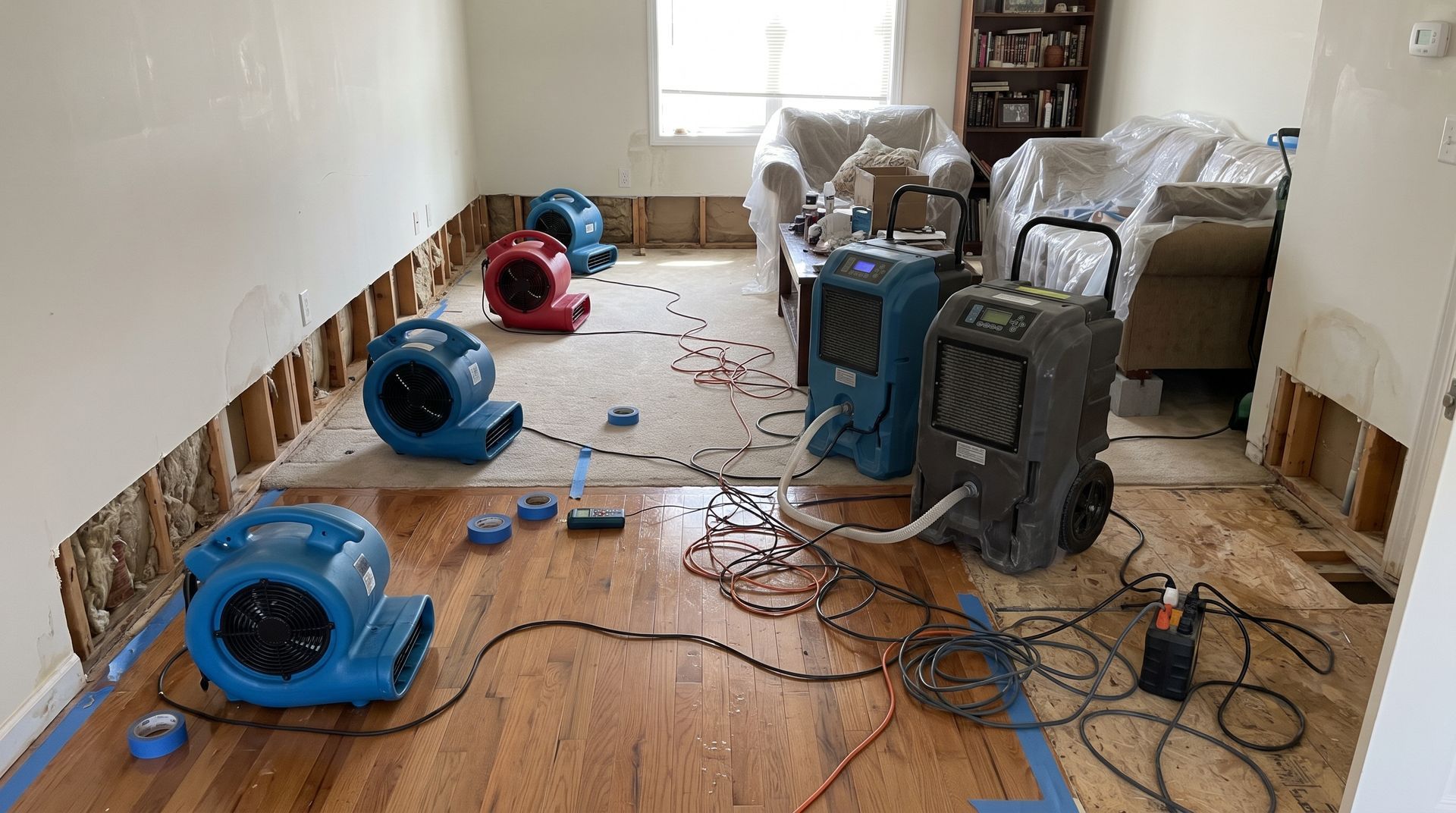
Once the water is out and the cavities are opened, the drying system goes in. It runs around the clock, usually for 3 to 5 days on a typical burst pipe.
What the Equipment Does
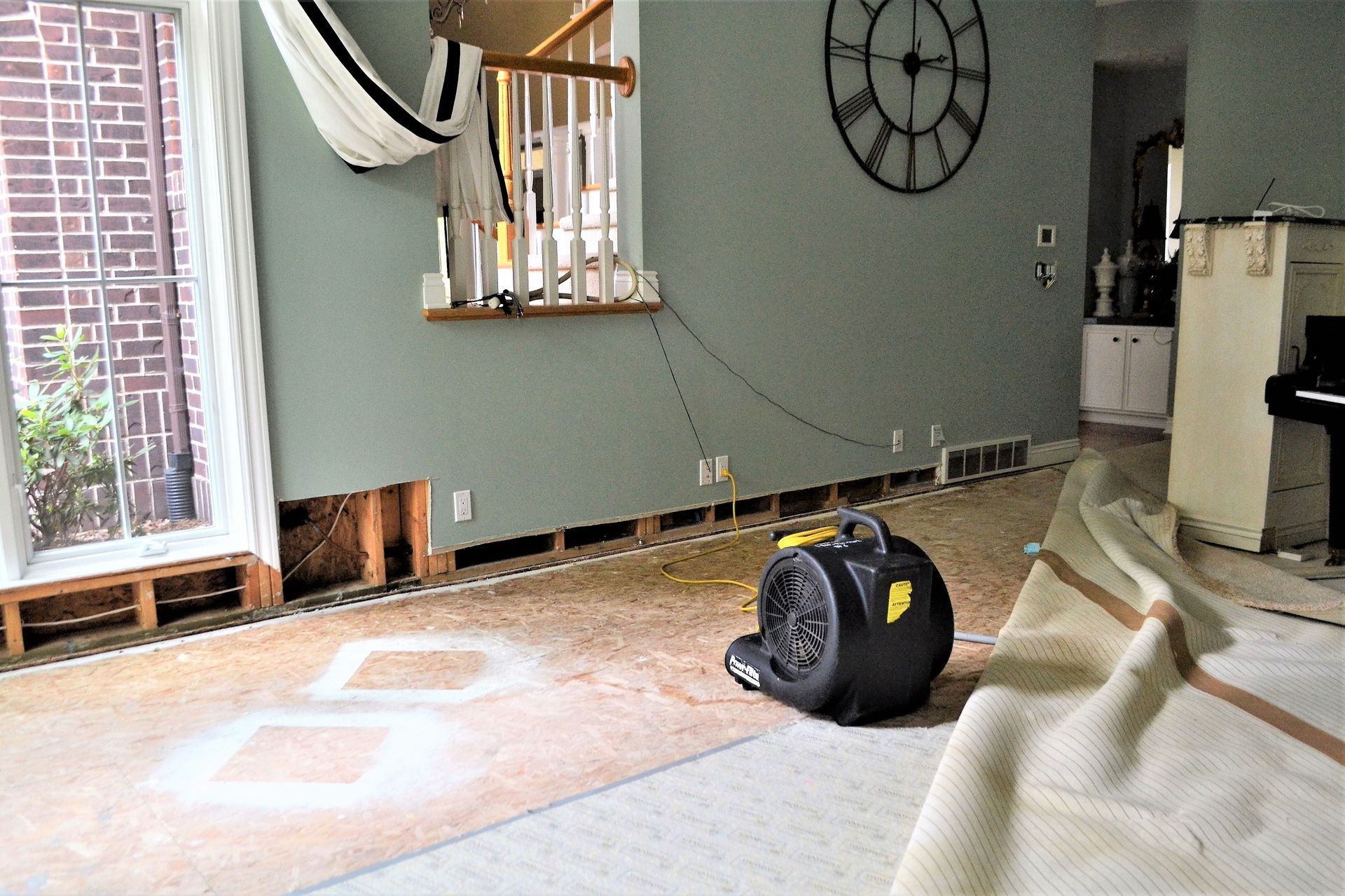
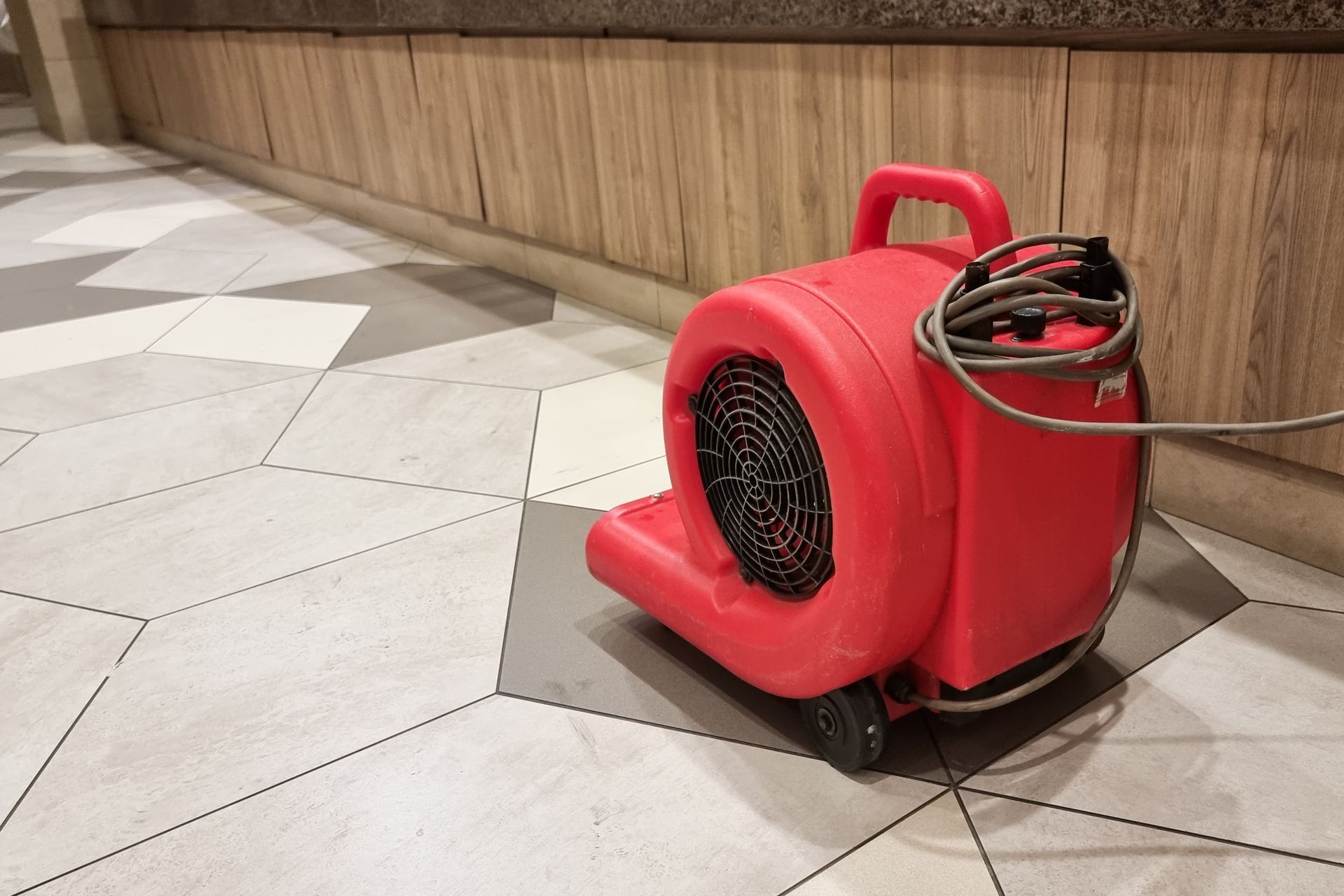
Air movers push air across wet surfaces so moisture evaporates. Dehumidifiers pull that moisture out of the air before it can soak back into drywall or wood. For walls that are wet inside but still intact, we can direct air into the cavity through small holes behind the baseboard line. That often saves the wall from being cut open.
Keep the Windows Closed in Winter
It feels natural to open windows. In a Connecticut January, that mostly makes the house cold, and cold materials dry slowly. Keep the heat at a normal setting and let the dehumidifiers do the work. In summer, outdoor humidity can actually add moisture, so windows usually stay closed then too.
Readings Decide When It Is Dry
On day one, we take moisture readings in the wet materials and compare them to dry areas of the same house. Those numbers get logged every day until the wet areas match the dry ones. That is the drying standard, and it is the only reliable way to know the job is done. Our guides on how long water damage takes to dry and whether water damage can come back after drying explain why surfaces that feel dry can still be wet inside.
If materials stay wet past the first couple of days, mold becomes a real risk. Our article on
how fast mold grows after water damage explains that timeline and what speeds it up.
Protecting Your Belongings in the First Day
Structure gets most of the attention, but contents damage adds up fast if nothing gets moved.
- Lift wood furniture onto blocks or foil squares so the legs stop wicking water and staining the carpet.
- Pick up area rugs and get them off wet floors, since dyes can bleed into carpet or wood.
- Move books, documents, and photos somewhere dry. Wet papers you cannot replace can go into a freezer until a professional can treat them.
- Do not plug in wet electronics or appliances. Unplug them and set them aside for evaluation.
- Empty lower cabinets and closets so air can reach the floor and walls behind them.
- Photograph damaged items before discarding anything, and keep a simple list as you go.
For larger losses, we can pack out contents, clean them off-site, and store them while the house dries and gets rebuilt.
Mistakes That Make Burst Pipe Cleanup Harder
Most of the expensive problems we see after burst pipes come from a handful of decisions made in the first day.
Waiting to See If It Dries
A few fans and a closed door feel like enough when the floor looks dry by evening. The water that matters is in the pad, the bottom of the drywall, and the cabinet base. Those areas rarely dry on their own before mold has a chance to start.
Closing Walls Too Soon
Painting over a stain or reinstalling baseboards before readings confirm the area is dry traps moisture behind finished surfaces. That is how water damage seems to come back weeks later.
Throwing Things Out Before Documenting
Insurance adjusters need to see what was damaged. Photograph every item and section of material before it leaves the house. Our guide on whether homeowners insurance covers water damage explains what policies typically include for sudden pipe bursts.
Using Bleach on Drywall and Wood
Bleach does not stop mold inside porous materials, and it adds moisture to something you are trying to dry. Drying and, where needed, professional antimicrobial treatment are what work.
Get Help With Burst Pipe Cleanup in Connecticut
Our team responds 24/7 to burst pipes throughout Central Connecticut. We handle the full sequence: moisture mapping, extraction, tear-out, drying, and reconstruction once the house is dry. You work with one team from the first call to the final coat of paint. We document the job for your insurance company and work directly with your adjuster, and we offer financing when you need it.
Learn more about our water damage restoration services or see what the full water damage restoration process looks like from start to finish. We serve homeowners in Newington, Hartford, West Hartford, New Britain, Wethersfield, and surrounding towns.
Call Incredible Restorations at (866) 985-4551 or
contact us online. We are located at 151 Carr Avenue, Suite 1, in Newington.
Frequently Asked Questions
How long does burst pipe cleanup take?
Extraction and tear-out usually happen on the first day. Drying typically takes 3 to 5 days for a single burst, and longer if hardwood floors, multiple floors, or a basement are involved. Repairs and rebuilding follow once readings confirm everything is dry.
Can I stay in my house after a pipe bursts?
In most cases, yes. Drying equipment is loud and the house will feel warm, but it is usually safe to live in. The exceptions are homes with contaminated water, large ceiling collapses, no working water service, or electrical damage.
Is water from a burst pipe dangerous?
Water from a clean supply line is not dangerous at first. It can become contaminated as it runs through insulation and sits on floors, and water from a drain line or toilet overflow is not clean from the start. Electrical hazards are often the bigger immediate risk.
Should I turn the water back on after a pipe bursts?
Not until the damaged pipe is repaired or isolated. A plumber can often cap the broken branch so water returns to the rest of the house the same day. Test the repair before any walls are closed.
Does homeowners insurance pay for burst pipe cleanup?
Many homeowners policies cover sudden pipe bursts, including the cleanup and drying. Slow leaks and damage from neglected maintenance are often excluded. Report the claim promptly and keep photos, receipts, and the failed part.